

The intelligence behind better decisions in South Africa’s energy sector
A decisive moment for energy transition. R292 billion invested, yet transmission bottlenecks threaten momentum. Discover what’s driving growth, where critical gaps remain, and the five strategic priorities for scaling to 2030.
R292B
Invested since REIPPPP launch in 2011
15 GW
Installed renewable capacity by 2024
93,000
Job-years created across projects
20330
Target for doubling capacity
The Energy Transition Accelerates
South Africa’s renewable sector has demonstrated commercial viability, yet structural challenges demand urgent policy attention and coordinated infrastructure investment.
Grid Constraints Limit Growth
The Northern and Eastern Cape have exhausted available transmission capacity. Without accelerated grid expansion, large-scale wind and solar projects remain stranded despite capital availability.
Localisation Lags Behind
South Africa accounts for one-third of Africa’s solar panel imports. Domestic manufacturing capabilities remain underdeveloped, risking trade dependence and limiting industrial job creation.
Market Liberalisation Reshapes Participation
The ERA 2024 and corporate PPAs signal a shift from centralised procurement to decentralised generation. Private actors are increasingly driving the energy transition beyond government programmes.
Skills Shortages Are Critical
Engineering, project management, and operational technician roles face acute shortages. Without targeted workforce development, the sector cannot sustain long-term growth or localisation.
Finance Models Are Evolving
Green bonds, blended finance, and off-balance-sheet structures are becoming central to mobilising the estimated R1.5 trillion required by 2030. Concessional funding is key to closing the investment gap.
Green Hydrogen Emerges
With R800 billion in projects already in the pipeline, hydrogen production offers new pathways

What the Market Is Wrestling With Right Now
You’re probably tracking one or more of these right now.
- Grid constraints in the Northern and Eastern Cape are stranding projects despite capital being available. How long has this been a problem, and what are the solutions?
- Corporate PPAs are accelerating. What does a well-structured deal look like, and what risks are the market not accounting for?
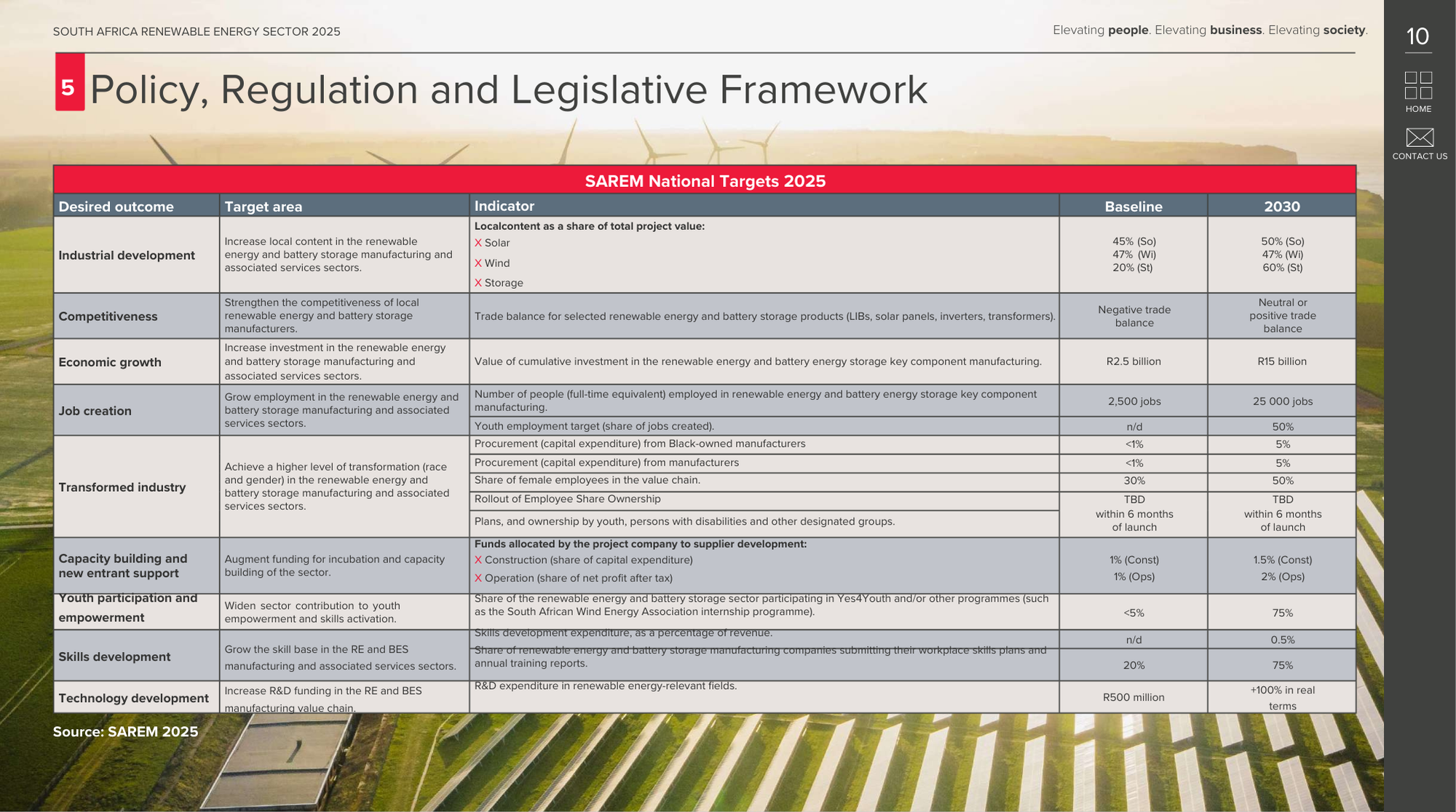
- SAREM, the ERA, Bid Window 7. Three major policy shifts in 12 months. What do they mean for your position in 2026 and beyond?
Why This Report Matters
The Challenge Is Clear
Over R1.5 trillion is needed by 2030. Grid constraints threaten to delay projects worth billions. Skills shortages limit industrial capability. Localisation remains underdeveloped. Without decisive action on these fronts, South Africa risks squandering an opportunity to transition to clean energy while building competitive manufacturing and creating sustainable jobs.
This report draws on 182 sources, interviews with sector leaders, and analysis of procurement outcomes, grid assessments, and financing models. It maps the current state of the sector and identifies the inflection points that will determine whether South Africa can scale renewables at the pace its economy demands.
The window to get this right is narrowing. This report maps where the sector stands and what the next 24 months will demand from every player in it.

IOA covers all 54 African markets. Chances are we’ve already done work in your sector. If you want to see what that looks like in practice, let’s set up a short call.