Safeguarding Democracy Through Insight: The Role of Election Monitoring

Safeguarding Democracy Through Insight_ The Role of Election Monitoring

In Africa’s complex and rapidly evolving political landscape, elections are pivotal moments. They can signal democratic consolidation or expose institutional fragility. They can empower new leadership, ignite reform, or unfortunately, deepen societal divides. Against this backdrop, election monitoring plays a critical role, not only in upholding transparency and credibility, but also in ensuring that the voices of citizens are accurately reflected in electoral outcomes.

As electoral cycles continue to intensify across the continent, with more countries holding regular multiparty elections than ever before, the need for robust, data-driven election monitoring has become both a democratic imperative and a strategic necessity. It offers governments, civil society, and the international community a clearer lens into the fairness, inclusivity, and legitimacy of these high-stakes moments.

Read more

Navigating Complexity: The Value of B2B Research in Africa

Navigating_Complexity_The_Value_of_B2B_Research_in_Africa

Doing business with businesses in Africa is a high-stakes game and often an opaque one. Unlike consumer markets, where mass marketing and trend-tracking tools abound, B2B landscapes are less visible and more relationship-driven. Procurement systems vary widely, decision-makers are often dispersed across formal and informal structures, and purchase drivers don’t always align with global benchmarks. In this environment, assumption-led strategies can lead to stalled partnerships, missed opportunities, and inefficient sales cycles.

This is where B2B research becomes critical. It provides the structure, insight, and nuance needed to make sense of complex value chains and customer ecosystems. It reveals not only who the decision-makers are, but how they think, how they buy, and what motivates their choices. In African markets where relationships often trump brand visibility, B2B research offers a competitive edge.

Read more

Listening Within: Why Employee Research Is a Strategic Priority

Listening Within Why Employee Research Is a Strategic Priority

In the race to outperform competitors and adapt to shifting markets, many African organisations are realising that their greatest asset isn’t only external, but rather it’s internal. Employees are the pulse of a business. They shape customer experiences, drive innovation, and define an organisation’s culture from the ground up. But in too many companies, decision-makers rely on assumptions, anecdotes, or outdated feedback mechanisms to understand how their people are truly feeling.

Employee research changes that. It offers a structured, evidence-based way to uncover what’s working, what’s not, and what needs to change in the workplace. From morale and engagement to management practices and cultural cohesion, this form of research unlocks insights that drive better decisions, improve retention, and strengthen organisational performance. It’s not just an HR tool but a leadership imperative.

Read more

Listening with Purpose: What These Services Actually Do

Listening with Purpose_What These Services Actually Do

Media monitoring involves systematically tracking coverage across traditional media platforms including radio, television, print, and digital news outlets, to assess how a brand, individual, issue, or sector is being portrayed. It helps organisations understand not only where they’re being talked about, but how and by whom. It’s a structured, often keyword-driven approach that can be tailored by geography, language, and outlet type.

Social listening, while related, digs into the informal, fast-moving world of online conversations on Twitter/X, Facebook, blogs, forums and more. It looks beyond brand mentions to uncover sentiment, themes, and trends in how people feel and talk about issues that matter. Where monitoring tells you what’s being said, listening tells you what people mean. It captures nuance, emotion, and the tone of the market.

Read more

From Possibility to Proof: The Role of Opportunity Assessments in Africa

From Possibility to Proof_The Role of Opportunity Assessments in Africa

Africa’s markets are brimming with potential and opportunity – from emerging tech ecosystems in Nairobi and Lagos, to renewable energy surges across the Sahel, and infrastructure revamps from Cairo to Cape Town. But with promise comes complexity. For businesses and investors, the challenge is not in finding opportunity, it’s in verifying it. That’s where opportunity assessments come in.

Far too often, decisions to enter a new market, invest in a new vertical, or launch a new product are driven by ambition, not evidence. Opportunity assessments are the antidote. They offer a structured way to test assumptions, validate demand, assess risk, and tailor strategy before significant resources are deployed. In a region as fast-changing and fragmented as Africa, this kind of due diligence is essential.

Read more

Building Forward: The Strategic Value of Business Development in Africa

Building Forward The Strategic Value of Business Development in Africa

Business development is often misunderstood as sales by another name. But in Africa’s fast-evolving commercial and development ecosystems, it has become something much broader and more essential. It’s the work of discovering opportunities, designing entry points, and creating long-term value through insight, partnerships, and positioning. It’s not just about growth; it’s about intentional growth.

For both private enterprises and mission-driven organisations operating across the continent, business development and strategic support are how ambition becomes action. They offer a structured way to assess risk, identify whitespace, and connect high-level goals to on-the-ground realities. As competition intensifies and geopolitical and economic currents shift, African markets are demanding sharper strategy and more adaptive models. The organisations that succeed will be the ones that treat business development not as a reactive function, but as a continuous, insight-driven process. 

Read more
Core Policy Objectives of the African Space Agency

Africa’s space race: What satellite ambitions reveal about development priorities

Analysis in brief: African nations are deploying space satellites in record numbers, thanks to inexpensive nanotechnology. Small but sophisticated, these African devices in Earth orbit are providing a wealth of data to enable their sponsoring countries to achieve their socio-economic goals.

As of 2025, 61 African satellites orbit the Earth. 30 years ago, there were none, even though satellites were already commonplace at that time for communications and data collection. Today, those same two functions are being utilised by 18 African countries, whose space programmes took a giant leap forward with the establishment of the African Space Agency (AfSA) on 20 April 2025.

Read more
Five politically stable African countries

Africa’s five most politically stable countries

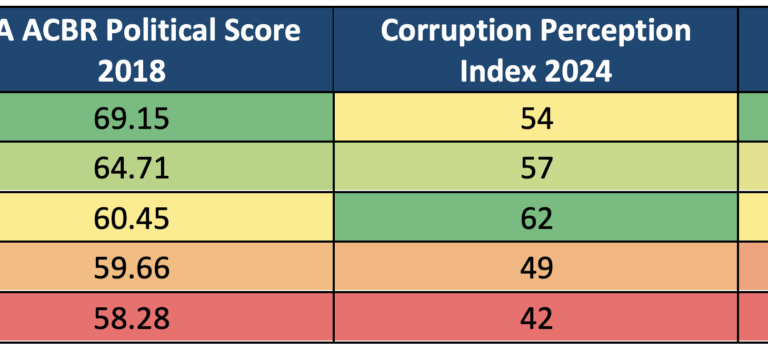
Analysis in brief: In a volatile continent, some African countries have achieved political stability that provides the foundation for national peace and prosperity. A ranking Africa’s five most-stable countries finds a commitment to citizen-driven democracy is the foundation for their success.

Political stability is valued by citizens who are fortunate to live in a country governed with that quality. It is also valued by the business sector of such a country, for upon a foundation of normalised peace, prosperity can take root. International bodies are likewise grateful for politically stable countries that provide a regional shield against neighbouring nations in conflict or political turmoil.

Read more
Literacy Rate sub-Saharan Africa 2013-2023

Digital education will achieve digital inclusion

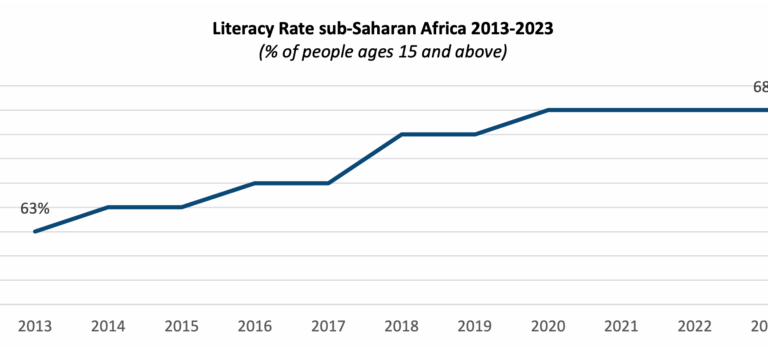
Analysis in brief: Regarded as the means to achieve digital inclusiveness in Africa, digital education will result in greater individual opportunities, as well as national economic and societal growth. This continental push is being spurred by several public and private partnership initiatives to overcome connectivity and literacy challenges.

Educating Africans in digital technology is made simpler by the fact that, in 2024, for the first time, a majority of Africans have internet technology, exemplified by the 51% of Sub-Saharan Africans who own smart phones. By 2030, an overwhelming majority of 88% of Sub-Saharan Africans will possess these devices. This is the start of a digitally literate population, who use apps for banking, amusement, news and more complex tasks. Meanwhile, digital education is increasing in schools, where students learn that their futures depend on mastering digital technologies.

Read more
Property trends in South Africa 1995 - 2024

Land reform: A new South African approach seeks to address a politically charged issue with pragmatic food production goals

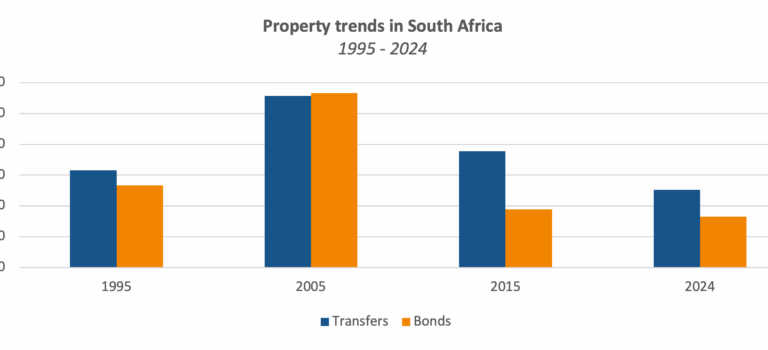
Analysis in brief: Centuries of colonialism dispossessed many Africans of their land. Radical attempts at land reform in the past have failed, neither mitigating inequality nor improving food production. South Africa has allowed the market to function as one mechanism for redistributing land, while also pioneering a pragmatic approach that focuses on poverty eradication through sound land management.

Land reform is a politically sensitive issue. Demagoguery has often hindered the resolution of this issue. Zimbabwe’s confiscation of white-owned land, originally taken during the colonial era, led to deaths, chaos, lawsuits and a collapse in food production, further weakening the country’s economy. Making productive land unproductive by removing expertise and capital proved not to be a solution.

Read more
Top 10 African Countries - Longest Railway Lines 2024

The privatisation of Africa’s railways boosts intra-Africa and global trade

Analysis in brief: Rail lines are among African nations’ most valuable assets, but many countries cannot afford their upkeep. Privatisation has been the preferred method of shifting the maintenance burden from the transportation sector to the investment sector, raising infrastructure standards that, in turn, spur trade-related revenue and employment.

Twenty years have passed since the first comprehensive study of the degree of improvement in Africa’s rail transportation systems by the privatisation of state-owned railways. The privatisation had been accomplished primarily through concession agreements. At the time of the 2005 World Bank study, 20 state-owned rail lines were either undergoing privatisation or had concessions granted by governments. The study found that progress varied: Some deals were cancelled, others were delayed by wars, and some suffered from weather-related disasters or other calamities. On the whole, the bank found, “The railways (that have been privatised) are performing better than if they had not been concessioned.”

Read more